Top 5 Tips to Maximize EV Battery Life in Delhi Summers
TYSON Tech Team · 29 Aug 2026
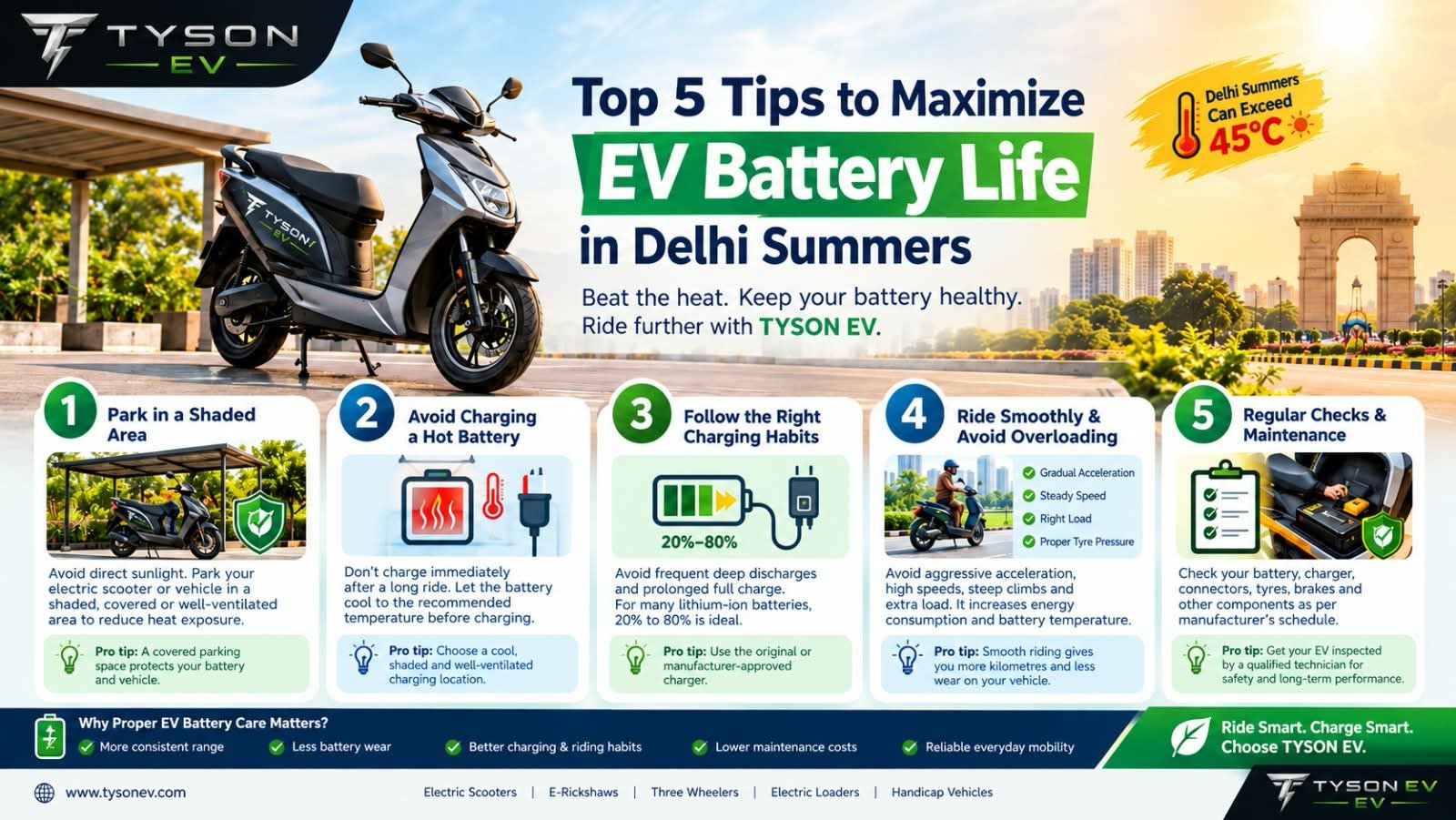
Delhi summers can be extremely challenging for electric vehicle (EV) batteries, with temperatures sometimes exceeding 45°C. Excessive heat can affect battery performance, charging efficiency, and long-term battery health. Whether you use an electric scooter, e-rickshaw, electric loader, or three-wheeler, following the right battery care practices can help you get better performance and extend battery life.
At TYSON EV, we believe that smart riding habits and proper battery maintenance are essential for a reliable and cost-effective electric mobility experience.
1. Park Your EV in a Shaded Area
Direct sunlight and extreme temperatures can cause your EV battery to heat up unnecessarily. Whenever possible, park your electric scooter or vehicle in a shaded, covered, or well-ventilated area.
Pro tip: Avoid leaving your EV exposed to direct sunlight for long periods. A covered parking space can help reduce heat exposure and protect your vehicle.
2. Avoid Charging a Hot Battery
Charging immediately after a long ride, especially during peak summer hours, may add to the battery's heat load. Allow the battery to cool to the temperature recommended by the manufacturer before charging.
Pro tip: Choose a cool, shaded, well-ventilated charging location and always follow your vehicle manufacturer's charging instructions.
3. Maintain the Right Charging Habits
Your charging routine can make a difference in battery performance and longevity. For many lithium-ion batteries, avoiding frequent deep discharges and prolonged exposure to a fully charged state can help reduce battery wear.
For everyday use, a charge range of around 20% to 80% may be suitable for compatible lithium-ion batteries. However, the ideal charging range depends on the battery chemistry and manufacturer's recommendations.
Pro tip: Use the original or manufacturer-approved charger, and never leave a battery charging in an excessively hot or poorly ventilated area.
4. Ride Smoothly and Avoid Overloading
Aggressive acceleration, continuous high-speed riding, steep climbs, and carrying loads beyond the vehicle's rated capacity can increase energy consumption and battery temperature.
To improve your EV's efficiency:
- Accelerate gradually and maintain a steady speed.
- Avoid unnecessary rapid acceleration and hard braking.
- Follow the vehicle's recommended load capacity.
- Keep tyres inflated to the recommended pressure.
Pro tip: Smooth riding helps you get more kilometres from each charge while reducing unnecessary stress on vehicle components.
5. Schedule Regular Battery and Vehicle Checks
Regular maintenance helps identify problems before they affect your daily commute or business operations. Check your battery, charging cable, connectors, tyres, brakes, and other essential components according to the manufacturer's service schedule.
If you notice unusual battery heating, swelling, a burning smell, damaged cables, or a sudden drop in range, stop using or charging the vehicle and seek professional assistance. Never attempt to open or repair a high-voltage battery yourself.
Pro tip: Get your EV inspected by a qualified technician to maintain safety, reliability, and performance throughout the summer.
Bonus Tip: Understand Your EV Battery Type
Different EV batteries require different care practices. Lithium-ion and lead-acid batteries have different charging requirements, maintenance needs, and temperature limits. Always follow the guidance provided for your specific battery type.
Why Proper EV Battery Care Matters
Taking care of your EV battery can help you:
- Maintain more consistent riding range.
- Reduce unnecessary battery wear.
- Improve charging and riding habits.
- Minimize avoidable maintenance expenses.